Portugal captivates visitors with the diversity of its landscapes, historic cities, and cuisine. Situated between the Atlantic Ocean and the interior, the country combines a remarkable architectural heritage, diverse natural landscapes, and a vibrant culture, epitomized by fado, azulejos, and the cork-making tradition.
In this article, we’ll introduce you to the best activities and must-see places in Portugal, organized by theme. Here, we are focusing on mainland Portugal.
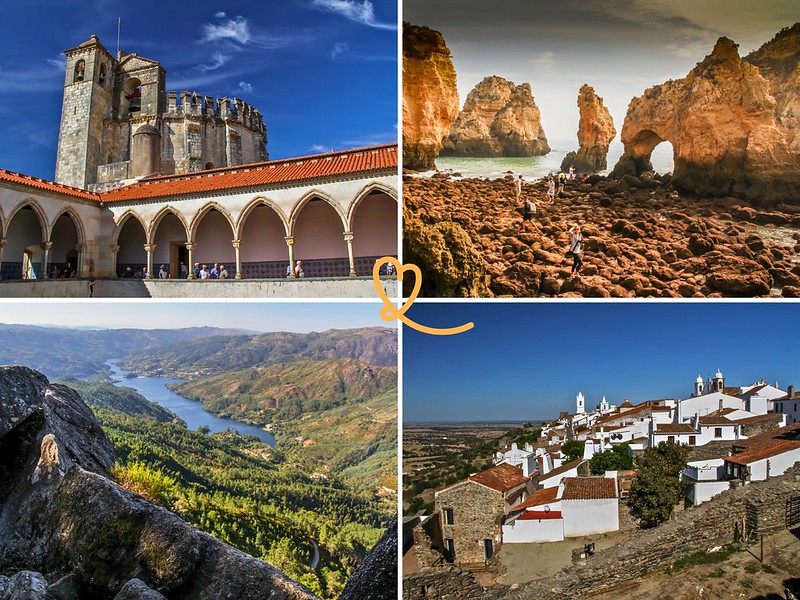
This opinion is completely independent, based on our experiences. We visited the region anonymously, making our own choices and paying our bills in full.
1. Lisbon, the capital

Built on seven hills overlooking the Tagus River, Lisbon is one of the most charming European capitals. We enjoyed its atmosphere, which was both urban and laid-back, punctuated by the passing of yellow trams along the steep, narrow streets.
The historic neighborhoods are best explored on foot, as you pass by miradouros that offer unobstructed views of the river and the tiled rooftops. We recommend setting aside at least 3 days to explore its various neighborhoods at a leisurely pace, each with its own unique character.

- The Alfama neighborhood, the city’s oldest, where the sounds of fado echo through the narrow alleys
- The Belém Tower and the Jerónimos Monastery, designated as UNESCO World Heritage Sites
- Castelo de São Jorge ( Château Saint-Georges ), which overlooks the city and offers a panoramic view of the Tagus River
- The many views of the city
- The Elevador de Santa Justa, an early 20th-century metal elevator that connects the lower city to Chiado
- The Bairro Alto neighborhood, which comes alive in the evening thanks to its many bars and restaurants
- See our article on the best attractions in Lisbon
2. Porto

Porto, the country’s second-largest city, is known for its colorful facades, its wine cellars, and the Douro River that runs through it. We enjoyed getting lost in the steep alleyways of the Ribeira district, a UNESCO World Heritage Site, before walking across the Dom Luís I Bridge to reach the opposite bank.
You can easily explore the city in two days, between strolls along the riverbanks and tastings at the Port wine cellars in Vila Nova de Gaia. Be sure to plan on staying at least one night so you can enjoy the evening atmosphere along the Douro River.

- The Ribeira neighborhood, on the banks of the Douro River, a UNESCO World Heritage Site
- The Dom Luís I Bridge, a two-level steel structure built in the late 19th century
- The Port wine cellars in Vila Nova de Gaia, where you can taste Port and learn about how it’s made
- Livraria Lello, a century-old bookstore renowned for its carved staircase
- The Cathedral, its ceramics, its cloister…
- The Torre dos Clérigos, an 18th-century Baroque tower offering a view of the city
- The Bolhão Market, a renovated indoor market, where you can discover local products
3. Other major cities (Évora, Faro, Tavira, Aveiro…)

In addition to Lisbon and Porto, there are several other cities worth visiting on a trip to Portugal. We especially liked their more relaxed pace, which made for a less rushed sightseeing experience than in the two major cities.
Each has its own unique heritage: Roman ruins, canals, and one of the oldest universities in Europe. We recommend choosing 2 or 3 of them based on your itinerary, rather than trying to fit them all in too quickly.

- Évora, a fortified city in the Alentejo region, known for its Roman temple and Chapel of Bones
- Coimbra, the country’s former capital, home to one of Europe’s oldest universities
- Aveiro, nicknamed the Venice of Portugal for its canals and colorful boats, the moliceiros
- Faro, the gateway to the Algarve, with its fortified old town
- Braga, a religious city in the north of the country, known for its Baroque churches
- Guimarães, considered the cradle of Portugal, where the country took shape in the 12th century
- Tavira, a small town in the Algarve, more authentic than the neighboring beach resorts
- See our list of the most beautiful cities in Portugal
OUR TIPS FOR RENTING A CAR IN Portugal
- Compare prices on our preferred platform: DiscoverCars – one of the best rated sites.
- Don’t take a car that’s too wide, as old towns have narrow streets and small parking spaces.
- For more choice, book early.

4. Royal and Noble Palaces (Sintra, Guimarães…)

Portugal is home to a remarkable collection of palaces, most of which are concentrated in Sintra, the former summer residence of the Portuguese court. We were surprised by the diversity of architectural styles found in such a small area: Romantic, Neo-Moorish, and Neo-Manueline styles follow one another from one palace to the next.
It takes two full days to explore Sintra, as there are so many sites and they are spread out. We recommend that you book your tickets online in advance, as attendance is high year-round. But you’ll find a few other palaces scattered throughout Portugal.

- The Pena National Palace in Sintra, a 19th-century romantic palace with vibrant colors
- The National Palace of Sintra, a former royal residence recognizable by its two tall chimneys
- Quinta da Regaleira, an esoteric estate featuring an initiatory well and terraced gardens
- The Monserrate Palace, a Neo-Moorish residence surrounded by a botanical garden
- The Paço dos Duques de Bragança in Guimarães, a 15th-century palace of the Dukes of Bragança
- The National Palace of Queluz, near Lisbon, with gardens inspired by Versailles
5. Traditional villages (Monsanto, Monsaraz, etc.)

Far from the big cities, Portugal is home to many villages that have preserved their original architecture. We enjoyed walking through these towns, among granite houses and cobblestone streets, where life seems to follow a different rhythm.
Some stand out for their geological or historical features, such as houses built among the rocks or the medieval ramparts that surround them. Half a day is usually enough for each village, which makes it possible to visit several of them on the same trip.

- Monsanto, a village built among enormous granite boulders
- Monsaraz, a fortified village in the Alentejo region, overlooking the Alqueva Reservoir
- Marvão, a fortified village perched at an altitude of over 800 meters, on the Spanish border
- Óbidos, a small town entirely surrounded by medieval ramparts
- Ferragudo, a fishing village in the Algarve
- See our selection of Portugal’s most beautiful villages

It’s time to book!
Compare everything: companies, prices, schedules and availability.
6. Beach destinations (Algarve, Arrabida, Costa Nova…)

With nearly 950 km of Atlantic coastline, Portugal offers a wide variety of beaches, from the secluded coves of the Algarve to the long stretches of sand along the Alentejo coast. Its waters never get very warm because of the Atlantic currents.
The west coast also attracts surfers, while the south coast offers calmer waters. We recommend that you check the swimming flags, as some beaches are subject to strong currents.

- The beaches of the western Algarve, surrounded by limestone cliffs and sea caves
- The Arrábida Peninsula, south of Lisbon, known for its turquoise waters
- Costa Nova, near Aveiro, famous for its striped houses facing the beach and its dunes
- Peniche, a well-known surfing spot with several beaches facing different directions depending on the wind
- Ericeira, a seaside resort renowned in the surfing world and designated a World Surfing Reserve
7. Castles and fortresses (Castle of the Moors, Silves, Sagres…)

Portugal has long been a contested territory, which explains the large number of castles and fortresses scattered throughout the country. We found these sites particularly interesting for understanding the country’s history, from the Moorish occupation to the Christian Reconquista.
Many are located in prominent positions, on hills or along the coast, which also makes them good vantage points. The tour usually takes between 1 and 2 hours, including the ramparts.

- The Château des Maures (Castelo dos Mouros) in Sintra, a 9th-century Moorish fortress
- Silves Castle, in the Algarve, a former Moorish capital built of red sandstone
- The Sagres Fortress, at the southwestern tip of Europe, associated with Portuguese navigators
- The Óbidos Castle, now converted into a pousada, which overlooks the walled city
- Guimarães Castle, considered the birthplace of the Kingdom of Portugal
- Marvão Castle, which overlooks the Spanish border from its rocky promontory

8. Monasteries and convents (Jerónimos, Cristo, Batalha…)

The Manueline style, unique to Portugal, finds its most accomplished expression in the country’s great monasteries. We particularly appreciated the intricate carvings that adorn the gateways and cloisters, blending maritime motifs with late Gothic elements.
These buildings, many of which are designated as UNESCO World Heritage Sites, bear witness to Portugal’s economic power during the Age of Discovery, between the 15th and 16th centuries. Allow at least 1 hour and 30 minutes for each visit, including the cloister.

- The Jerónimos Monastery in Belém, a masterpiece of the Manueline style
- The Convento de Cristo in Tomar, the former headquarters of the Order of the Temple and later the Order of Christ, is one of our favorite places to visit in Portugal, steeped in history
- The Monastery of Batalha, built to commemorate the Portuguese victory at Aljubarrota in 1385, and known for its unfinished chapels
- The Alcobaça Monastery, a Cistercian abbey known for the tombs of Pedro I and Inês de Castro
9. Cliffs (Ponta da Piedade, Cabo de Roca, Benagil, Falesia…)

The Portuguese coast features a mix of sandy beaches and cliffs carved by erosion, which are particularly spectacular in the Algarve. We have vivid memories of the caves that are accessible only by boat or kayak, where light sometimes streams through natural openings in the rock.
These sites are also ideal for walks along coastal trails, with designated overlooks. Morning or late-afternoon light is still the best for photography.

- Ponta da Piedade, in Lagos, a collection of rock formations and caves accessible by boat
- Cabo da Roca, the westernmost point of the European continent, west of Sintra
- Magoito Beach, surrounded by cliffs, north of Sintra
- The Algar de Benagil, a sea cave open to the sky, accessible by kayak or boat
- Praia da Falésia, in Albufeira, bordered by ochre cliffs stretching for several kilometers
- And of course, Madeira and the Azores—but those are other trips!

10. Cathedrals (Porto, Évora, Coimbra…)

Every major Portuguese city has its own cathedral, known locally as a “Sé,” which is often built on the foundations of a former mosque. We have noticed that these buildings often combine several architectural styles—originally Romanesque, then altered over the centuries to Gothic or Baroque.
Some of them still have cloisters or religious treasures that are open to visitors. It takes an average of 30 minutes to 1 hour to tour them, not including Masses and services. We recommend that you visit at least one of them.

- The Sé de Porto, a 12th-century fortified cathedral overlooking the Ribeira district
- The Sé of Évora, the country’s largest medieval cathedral, with its asymmetrical towers
- The Sé Velha of Coimbra, one of the few Romanesque cathedrals in Portugal that has been preserved intact
- The Lisbon Cathedral, the capital’s oldest cathedral, built after the reconquest of 1147
- The Sé de Faro, a blend of Gothic, Renaissance, and Baroque styles following several reconstructions
11. Other Unique Religious Sites (Bom Jesus, Santa Luzia, São Roque…)

In addition to the cathedrals, several Portuguese shrines and churches stand out for their architecture or location. In the cities, be sure to visit the many churches to admire their magnificent interiors. And for certain architectural styles, we recommend detours, such as the one to Braga.
These places also remain active pilgrimage sites, visited by the faithful throughout the year. We recommend adding a visit there if your itinerary takes you through the northern part of the country.

- The Bom Jesus do Monte Sanctuary in Braga, famous for its Baroque zigzag staircase
- The Santa Luzia Shrine in Viana do Castelo, offering a view of the mouth of the Lima River
- The Church of São Roque in Lisbon, whose simple façade conceals richly decorated chapels
- The Shrine of Fátima, one of Europe’s leading Marian pilgrimage sites
12. Natural Parks (Douro Valley, Penada Geres, Rio Formosa, Estrella…)

Portugal also offers vast natural areas that are perfect for hiking or exploring by car. We enjoyed the variety of landscapes we passed through, ranging from terraced vineyards to granite mountains and coastal wetlands.
The country’s only national park is located in the north, while other reserves protect a wide variety of habitats, ranging from the lagoon to the highest peaks on the Portuguese mainland. Be sure to bring good shoes and a map, as the trail network isn’t always consistently marked.

- The Douro Valley, a UNESCO World Heritage Site for its terraced vineyards
- Peneda-Gerês National Park, the country’s only national park, nestled among mountains and isolated villages
- The Ria Formosa Natural Park, a protected coastal lagoon in the Algarve, teeming with migratory birds
- The Serra da Estrela, the highest mountain range in mainland Portugal, where it snows in winter
13. Boat trips (dolphins, kayaking, Berlangas…)

The Portuguese coastline offers a variety of marine activities, from wildlife viewing to exploring sea caves. We chose a kayaking trip instead of a motorboat trip to explore the caves of the Algarve, which allows for a quieter approach and brings us closer to the rock faces.
These tours are often booked the day before, especially during peak season, when demand is higher. Some trips leave early in the morning, when the sea is generally calmer.

- Dolphin-watching tours, offered primarily from the Algarve and the Sado Estuary in Setúbal— see options
- Kayaking tours to the Algar de Benagil and nearby caves— see options
- Ferry trips to the Berlengas Islands, a nature reserve off the coast of Peniche— see options
14. Culture (Azulejos, cork, surfing the Nazaré wave…)

Portuguese culture is evident throughout the streets, through traditions passed down over several centuries: in its buildings, along its coastlines, in its restaurants and bars, at its markets…

- Azulejos, the painted ceramic tiles found on building facades, in churches, and at the National Azulejo Museum in Lisbon
- Cork, of which Portugal is the world’s leading producer, is transformed into handcrafted items
- Surfing in Nazaré, where some of the biggest waves ever surfed break
- Fado, a traditional Portuguese music genre, can be heard in the Alfama and Mouraria neighborhoods of Lisbon
15. Cuisine (Pasteis de Nata…)

Portuguese cuisine relies heavily on seafood, though it also features a variety of cured meats and cheeses from the inland regions. We discovered that cod (bacalhau) is prepared in hundreds of different ways, depending on the region and the family. L
Pastries also play an important role, particularly the pastel de nata, a small cream tart found throughout the country. We recommend that you try the regional specialties while you’re there, rather than limiting yourself to the most well-known dishes.

- Pastel de nata, a tartlet filled with caramelized cream, originating in the Belém neighborhood of Lisbon
- Bacalhau (dried and salted cod), traditionally prepared in a variety of ways
- The francesinha, a hearty sandwich from Porto, topped with a beer and tomato sauce
- Cataplana, a seafood stew typical of the Algarve, cooked in a copper pot
- Port wine, a fortified wine produced in the Douro Valley and aged in Vila Nova de Gaia
- Vinho verde, a light, slightly sparkling wine produced in the northern part of the country
OUR TIPS FOR RENTING A CAR IN Portugal
- Compare prices on our preferred platform: DiscoverCars – one of the best rated sites.
- Don’t take a car that’s too wide, as old towns have narrow streets and small parking spaces.
- For more choice, book early.
Other Sides of Portugal
Portugal also has some lesser-known sites that are a great addition to an already packed itinerary.
Prehistoric sites

The Alentejo is home to one of Europe’s most significant megalithic sites, which is still relatively unknown to travelers.
- The Almendres Cromlech, near Évora, a group of menhirs dating from the Neolithic period
- The Alcalar Necropolis in the Algarve, one of the country’s oldest known burial sites
Roman Sites

The Roman presence in Portugal (Lusitania) has left behind several well-preserved ruins.
- The Roman Temple in Évora, often mistakenly attributed to the cult of Diana
- The ruins of Conimbriga, near Coimbra, one of the country’s largest Roman archaeological sites, featuring magnificent mosaics still in situ
Jewish Heritage
Several Portuguese cities still have a historic Jewish quarter, known as a “judiaria,” which bears witness to a Jewish presence dating back to the Middle Ages.
- Castelo de Vide, whose Jewish quarter is one of the best-preserved in the country
- Belmonte, where a Jewish community has maintained its religious practices in secret for centuries
Thermal Baths and Spa Towns

Portugal has several spas, which have been popular since Roman times for their waters, reputed to have healing properties.
- Monchique, a spa town in the Algarve, surrounded by wooded hills
- Luso, a spa town known for its spring and its Art Deco buildings
Extend Your Trip to the Azores and Madeira

Mainland Portugal is only part of the country: the Azores and Madeira archipelagos, located in the middle of the Atlantic, are two destinations in their own right. We recommend that you plan a separate trip to these destinations rather than trying to combine them with a visit to the mainland, as the flights between the two require special planning.
Visit our website about Madeira.
Frequently Asked Questions About Things to Do in Portugal
How much time should you plan to spend visiting Portugal?
Plan on spending at least 10 to 15 days exploring Lisbon, Porto, a few traditional villages, and part of the Algarve. A 3-week trip allows you to include the Alentejo, the northern part of the country, and possibly one of the archipelagos. More tips on durations.
When is the best time to visit Portugal?
Spring (April through June) and fall (September–October) offer pleasant temperatures and moderate crowds. Summer, which is very popular along the coast, can be busy and hot, especially inland and in the Alentejo.
Should you rent a car to visit Portugal?
Renting a car makes it easier to reach villages, secluded beaches, and nature parks that are not well served by public transportation. Major cities like Lisbon and Porto, on the other hand, are easy to explore on foot or by public transportation. Learn more.
Is Portugal a family-friendly destination?
Yes, the Algarve in particular is popular with families for its sheltered beaches, water parks, and range of family-friendly accommodations. Lisbon and Porto are also great places for kids, with their trams, aquariums, and city parks.
PLAN YOUR TRIP TO Portugal
- Best of
Best destinations
Best attractions in Portugal
The most beautiful landscapes
Most Beautiful Cities
Most beautiful villages
Portugal’s Most Beautiful Beaches

- Practical advice
When to go?
How to rent a car in Portugal
Driving tips
How many days