When to visit the Algarve
It depends on your criteria.
Here’s our complete guide with details to help you make your decision based on:
- Weather (temperature, rain, wind, etc.),
- Crowds and prices,
- Sea temperature,
- The different zones (south coast, west coast, inland),
- Festivals and events,
- …
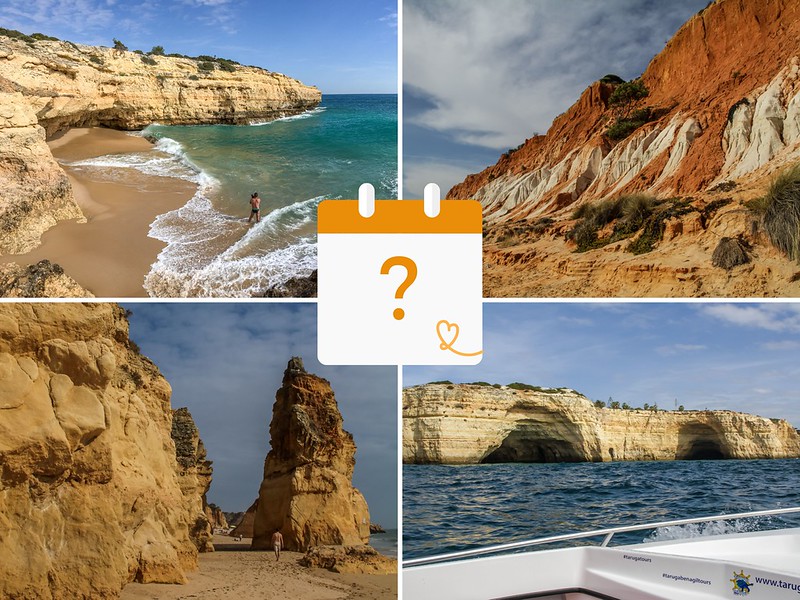
This opinion is completely independent, based on our experiences. We visited the region anonymously, making our own choices and paying our bills in full.
When to go to the Algarve – Summary
Best months to visit the Algarve
The Algarve enjoys a mild Mediterranean climate all year round. Our favorite months are May-June and September-October, when temperatures are pleasant and the crowds are smaller, especially outside school vacations.
A preference for the month of October.

Best period for each activity
It all depends on what you’re looking for:
- Best time for the beach: June to September
- Best time to surf: September to April (best waves)
- Best hiking season: March to May and October-November (lower temperatures)
- Best time for cultural visits: All year round, but preferably outside July and August.
When to visit the Algarve – Criteria
If you don’t want to read the whole article, here’s a summary based on what you’re looking for:
- Weather, temperatures, rain…
Mediterranean climate with hot summers (25-30°C) and mild winters (15-18°C). Rains are rare in summer, but more frequent from November to March. The west coast is windier than the south coast. - Swimming
The sea is swimmable from June to October. In summer, the water reaches 22-24°C on the south coast, but remains cooler on the west coast (19-21°C). In winter, it drops to 15-16°C. - Crowds and prizes
High season from mid-July to the end of August, with high prices and lots of people. Seasonal shoulders (May-June and September-October) offer a good compromise. Winter is quiet except for the holidays.

WHERE TO STAY IN THE Algarve
Our independent picks for the accommodation of your dreams:
- Where to stay in the Algarve
- Our favorite: Hotel Palmares Signature Apartments
Select by hotel type:
Select by city:

When to go to the Algarve – Weather and conditions by region
The south coast
The Algarve’s southern coast, from Lagos to the Spanish border, enjoys the mildest climate:
- Summer: warm but pleasant temperatures (25-30°C), very little rain. The sea breeze refreshes the atmosphere.
- Winter: mild temperatures (15-18°C), a few rainy periods, but around 300 days of sunshine a year.
- Mid-season: Ideal conditions with perfect temperatures (20-25°C).
The west coast
The west coast, from Sagres to Odeceixe, has a windier, cooler climate:
- Summer: more moderate temperatures (23-28°C), frequent wind. Ideal for surfing.
- Winter: Cooler and windier (13-16°C), good conditions for surfing.
- Mid-season: Variable weather, best periods for outdoor activities.
Inland
The interior of the Algarve experiences more extreme temperatures:
- Summer: More intense heat (28-35°C), little wind. Afternoons can be very hot.
- Winter: Cooler than on the coast (10-15°C), with occasional night frosts.
- Mid-season: Ideal time for exploring villages and hiking.

Sea temperatures in the Algarve
Sea temperatures vary according to season and location (south or west coast):
- January to March: 15-16°C
- April to May: 17-19°C
- June to August: 20-24°C (south coast), 19-21°C (west coast)
- September-October: 20-22°C
- November-December: 16-18°C
Best time to surf: September to April (best waves)

OUR ADVICE FOR RENTING A CAR IN THE Algarve
- Compare prices on our preferred platform: DiscoverCars – one of the best rated sites.
- Don’t take a car that’s too wide, as old towns have narrow streets and small parking spaces.
- For more choice, book early.

Length of day
Daylight hours in the Algarve through the seasons
The Algarve enjoys exceptional sunshine all year round, with marked seasonal variations that directly influence the visitor experience.
Winter (December-February)
- Shortest days: about 9.5 hours of light
- Sunrise: around 7.45 a.m.
- Sunset: around 5:15 p.m.
- Despite everything, generous sunshine compared with the rest of Europe
Spring (March-May)
- Mars: around 12 hours of sunshine at equinox
- May: over 14 hours of daylight
- Sunrise: as early as 6:30 a.m.
- Sunset: after 8:30 p.m.
Summer (June-August)
- Longest days: up to 14h45 of light
- Summer solstice (June 21): peak sunshine
- Sunrise: around 6.15 a.m.
- Sunset: until 9pm
Autumn (September-November)
- September: 13 more hours of light
- November: return at about 10 a.m.
- Gentle transition to winter
- Exceptional golden lights for photography
The Algarve guarantees over 300 days of sunshine a year, whatever the season.
Our photo below was taken in October.

Rain, wind, crowds…
Rain in the Algarve
The Algarve has one of the lowest rainfall rates in Europe, with over 300 days of sunshine a year. Rainfall is concentrated mainly between November and March, when short but sometimes intense showers refresh the region and turn the hills green.
Wind in the Algarve
The wind in the Algarve varies considerably depending on the season and the exposure of the beaches. The west coast, which is battered by the Atlantic, experiences stronger winds that are a delight for surfers and windsurfers. The more sheltered south coast offers much calmer conditions.
Summer brings the nortada, the north-westerly sea breeze that pleasantly cools scorching afternoons and keeps temperatures bearable.
In autumn and winter, the wind can strengthen during Atlantic lows, creating spectacular waves on the cliffs.

Crowds in the Algarve
July and August represent the absolute peak, with crowded beaches, full restaurants and saturated roads, especially in popular resorts such as Albufeira, Lagos and Vilamoura.
The Easter vacations and the end of June are also very popular, especially with European families.
FUN in the Algarve: activities
Caves and Cliffs by Boat
Kayak Tours
Dolphin watching
Jeep Tour

Special conditions: dolphins, closures…
Best time to see dolphins in the Algarve
The Algarve offers exceptional conditions for dolphin watching all year round, but certain periods are particularly propitious.
Spring and summer, from April to October, are the ideal season: the calm, sunny waters of the Atlantic attract a large concentration of common dolphins and bottlenose dolphins, which follow the shoals of sardines and mackerel along the coast.
But even in winter, resident dolphins don’t desert the area completely, although weather conditions can make outings more hazardous.
See our article on the best excursions from Lagos.

What birds to see in season on Ria Formosa
The Ria Formosa, an 18,000-hectare aquatic labyrinth classified as a nature park, can be discovered in different ways depending on the season.
Spring (March-May):
- Spectacular bird migration: flamingos, white stilts, spoonbills
- Flowering salt marshes and wet meadows
- Nesting terns and avocets on islets
Summer (June-August)
- Observing young birds and their first flights
Autumn (September-November)
- Massive return of migratory birds from northern Europe
- Salt harvesting in active salt marshes
Winter (December-February)
- Maximum concentration of wintering birds: thousands of waders
Whatever the season, the Ria Formosa offers a permanent natural spectacle where land, sea and sky merge in a biodiversity unique in Europe.
See our full article on Ria Formosa.

Best time to visit museums and castles
In the Algarve, most museums and forts don ‘t close completely during the winter months. Unlike some water parks and seaside resorts, which close in the off-season, cultural sites are generally accessible all year round.
But many monuments switch to winter time, usually fromOctober to April/May. They often close one or two hours earlier than in summer.


Description of the seasons in the Algarve
Spring in the Algarve
Spring (March to May) offers ideal conditions for visiting the Algarve. Temperatures are mild, nature is in bloom and the beaches are beginning to warm up. Perfect for hiking and outdoor activities. Prices are more affordable than in summer.

Summer in the Algarve
Summer (June to September) is the peak tourist season. Temperatures are hot but bearable thanks to the sea breeze. Beaches are crowded and prices are sky-high. Evenings are lively in the seaside resorts.
Autumn in the Algarve
Autumn (September to November) is an excellent time of year. The sea is still warm, crowds are thinning and prices are falling. Conditions are ideal for surfing on the west coast. The weather remains generally sunny with pleasant temperatures.

Winter in the Algarve
Winter (December to February) is mild compared with the rest of Europe. It’s low season with attractive prices. The days can be sunny but also rainy. It’s a good time for golf, culture and water sports for experienced surfers.
Major events and festivals
- February or March: Loulé Carnival
- March/April: Easter processions
- June: Festivals of Popular Saints
- July: Loulé Jazz Festival
- August: Silves Medieval Fair
- August: Sardine Festival in Portimão
- August: Olhão Seafood Festival
- December: Traditional Christmas markets
Algarve month by month
- See our dedicated articles:
- Algarve in January (coming soon)
- Algarve in March (coming soon)
- Algarve in April
- Algarve in May (coming soon)
- Algarve in June
- Algarve in July (coming soon)
- Algarve in August (coming soon)
- Algarve in September (coming soon)
- Algarve in October
- Algarve in November (coming soon)
- Algarve in December (coming soon)
PLAN YOUR TRIP TO THE algarve
- Best of
What to do in the Algarve
The most beautiful landscapes
Most beautiful towns and villages
Algarve’s most beautiful beaches
Best excursions

- Practical advice
When to go?
How to rent a car in the Algarve
How many days?
Itineraries
Where to stay in the Algarve
Lagos, Portimao or Albufeira
Most beautiful hotels