A week in Lisbon gives you time to see almost all of the Portuguese capital’s must-see attractions: the historic center, Belém, the eastern part of the city, its royal museums, its alternative neighborhoods, and two day trips to the surrounding area. We tested this route ourselves and think it’s perfect for those who want to take their time. Follow our guide to plan your trip so that everything goes smoothly.
With our itineraries, we’ll guide you through Lisbon. Optimize your stay and make up your own mind about this destination with our practical tips and plenty of photos!
This guide is completely independent, based on our experiences. We visited the region anonymously, making our own choices and paying our bills in full.
Practical Tips for Visiting Lisbon in One Week
What can you see in Lisbon in one week? Is that long enough?
In our opinion, in one week you can see almost all of the must-see sights: the historic center, Belém, the eastern part of the city, the museums and gardens of Ajuda, the alternative neighborhoods, as well as two day trips to Sintra and Cascais. Of course, a week isn’t long enough to see everything in the Portuguese capital. If you’d like to stay for a shorter time, check out our other itinerary articles: 1 day, 2 days, 3 days, 4 days, and 5 days in Lisbon.
Maps of must-see attractions
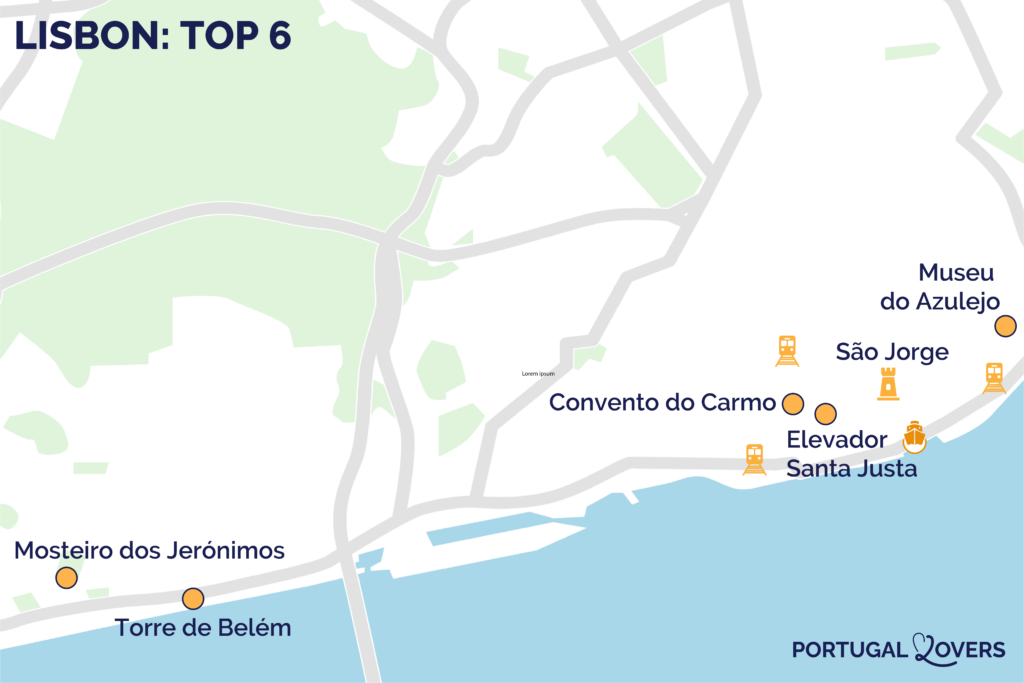
To help you follow along as you read our itinerary below, here is our map of Lisbon’s main tourist attractions:
Getting around Lisbon
Lisbon is a hilly city, built on seven hills, and the historic center is best explored on foot—provided you wear sturdy shoes. We alternated between walking, taking the subway, and riding the tram to give our legs a break in the steepest neighborhoods, such as Alfama and Bairro Alto. Tram 28 connects several historic neighborhoods, while the metro provides easy access to Belém, Parque das Nações, and Alcântara. To get to Ajuda, it’s best to take the bus or a taxi, since the neighborhood is uphill. You can also take a Hop-On Hop-Off bus, which stops at the main attractions. We highly recommend the Lisboa Card, which provides access to public transportation as well as free or discounted admission to many tourist attractions—a real bonus for a week-long visit!
OUR TIPS FOR RENTING A CAR IN Portugal
- Compare prices on our preferred platform: DiscoverCars – one of the best rated sites.
- Don’t take a car that’s too wide, as old towns have narrow streets and small parking spaces.
- For more choice, book early.

Where to Stay in Lisbon

For a week-long stay, it’s best to choose a centrally located place to stay, in Chiado or Baixa, so you can quickly reach the various stops on your itinerary. Find all our recommendations and tips by neighborhood in our comprehensive article on where to stay in Lisbon. Here are three places we recommend:
- Montebelo Vista Alegre Lisboa Chiado Hotel: Housed in a renovated historic building, this cozy hotel showcases Vista Alegre porcelain in its elegant decor, right in the heart of Chiado. See prices, photos and availability.
- Hotel Lisboa Pessoa: a hotel with a literary flair, paying tribute to the poet Fernando Pessoa, where we enjoyed the tranquility, comfort, and spa, right in the heart of the historic center. See prices, photos, and availability.
- Art Legacy Hotel: a 5-star boutique hotel housed in a fully renovated historic building, halfway between Baixa and Chiado. We enjoyed its elegant ambiance—a blend of contemporary design and preserved architectural elements—as well as its bright rooms with a cozy atmosphere. See photos, prices and availability.
WHERE TO STAY IN lisbon
Our favorites: neighborhoods and hotels
The Baixa neighborhood in the heart of Lisbon –
Hotel da Baixa – See prices, photos and availability
Dare Lisbon House Hotel – See prices, photos and availability
The Alfama neighborhood, the oldest and most charming –
Hotel Poussada Alfama – See prices, photos and availability
The Chiado neighborhood, the most elegant—
Art Legacy Hotel – See prices, photos and availability

Our Ideal Itinerary: 1 Week in Lisbon
Day 1: The Historic Center
Day 1 – 9:00 a.m.–10:30 a.m.: São Jorge Castle and Alfama

Start your stay early at São Jorge Castle, perched on the hill in Alfama. We were captivated by its imposing ruins, its slender towers, and its shady gardens where peacocks roam freely. Built in the 5th century, this Moorish castle has stood the test of time before becoming a Portuguese royal residence. From this vantage point, you can admire the red-tiled rooftops and the Tagus River as it winds its way through the city. The castle’s camera obscura—an optical device that projects a moving image of Lisbon onto a concave mirror—amused us greatly. Then take a leisurely stroll back down through the narrow streets of Alfama, the city’s oldest neighborhood.
Practical advice
- Estimated time: 1 hour and 30 minutes for the castle and its gardens
- Challenges: steep terrain, elevation changes in Alfama
- Access: minibus 37 or streetcar 28
- Price: €15 for a full-price ticket
- Opening hours: open daily from 9am to 9pm (closes at 6pm in winter)
- Don’t wait—book your ticket with an audio guide today!

Day 1 – 10:30 a.m.–11:30 a.m.: Sé Cathedral and miradouros

On your way back down toward the city center, stop by the Sé Cathedral, one of the oldest churches in Lisbon. Built in the 12th century, it combines Romanesque, Gothic, and Baroque styles, reflecting its successive reconstructions. We found the interior to be quite simple yet steeped in history, with its gilded altarpieces and colorful stained-glass windows. Then continue your stroll to the nearby miradouros, those viewpoints so typical of Lisbon. The Santa Luzia Miradouro, with its azulejos and colonnades, struck us as one of the most pleasant in the area, as did the Portas do Sol Miradouro, a little further on.

Practical advice
- Estimated time: 30 minutes to 1 hour for the cathedral; allow an additional 30 minutes for the miradouros
- Directions: Take tram 28, which drops you off right in front of the cathedral
- Price: €5 full price for the cathedral; free admission to the miradouros
- Hours: The cathedral is open daily from 10 a.m. to 5 p.m.
Day 1 – 11:30 a.m.–12:30 p.m.: National Museum of Contemporary Art (MNAC) or Museum of Design and Fashion (MUDE)

Before lunch, you can take a cultural break by choosing between two museums that are fairly close to each other. The National Museum of Contemporary Art, housed in a former convent in the Chiado district, features Portuguese works ranging from the late 19th century to the present day. We think this is a great spot for anyone who wants to round out their visit with a glimpse of the local art scene. The Museu do Design e da Moda, located in the Baixa district, is housed in a former bank building and features collections dedicated to 20th-century design and fashion.
Practical advice
- Estimated time: 1 hour for either museum
- MNAC: located on Serpa Pinto Street, in the Chiado district
- MUDE: located on Augusta Street, in the Baixa district
Day 1 – 12:30 p.m.–2:00 p.m.: Lunch in Chiado or Baixa

For lunch, head to Chiado or Baixa. We really liked the Prado Restaurant. The decor is understated and chic, and the kitchen puts a modern spin on traditional Portuguese dishes using seasonal ingredients. In addition, the wine list is worth checking out. The restaurant also offers vegan dishes. Another option we recommend: Restaurant Com Certeza, a traditional restaurant with picturesque decor, located near the MUDE museum, which serves traditional Portuguese cuisine in a warm and friendly atmosphere.
Practical advice
- Prado Restaurant: TV. das Pedras Negras 2, reservations required here
- Com Certeza Restaurant: near the MUDE Museum, in the Baixa neighborhood
- Restaurants generally open at 12:30 p.m. or even 1:00 p.m. for lunch
FUN around Lisbon: activities
Lisbon by E-Bike
Day Trip to Sintra from Lisbon
Dolphin watching
Kayaking in Arrabida
Surfing in Cascais

Day 1 – 2:00–3:30 p.m.: Chiado and Bairro Alto

The afternoon began with a tour of Chiado and Bairro Alto, two iconic neighborhoods that we found to be very lively. You’ll come across street musicians, squares shaded by purple jacaranda trees, and many shops. Be sure to stop by the Carmelite Convent, whose church lost its roof in the 1755 earthquake. We were struck by the beauty of these open-air ruins, which also house a fascinating archaeological museum. End this stop withthe Santa Justa Elevator, designed by a student of Gustave Eiffel, which offers a panoramic view of the city from its observation deck.
Practical advice
- Estimated time: 1 hour and 30 minutes for the entire area
- Rates: tram and elevator included with the Lisboa Card
- The Baixa Chiado metro station is ideally located for accessing these neighborhoods
Day 1 – 3:30–4:00 p.m.: Tram 28

Next, take tram 28, one of Lisbon’s landmarks. We had fun testing out this little bright yellow train car with a wooden interior, which dates back to the 1930s. It winds through the city’s narrow, steep streets, passing through legendary neighborhoods such as Alfama and Chiado. It’s also a relaxing way to enjoy the scenery in the late afternoon.
Practical advice
- Challenges: Expect long lines during peak season
- Hours: The tram runs from 6:00 a.m. to 10:30 p.m.
- Find the schedules and stops here
Day 1 – 4:00 p.m.–6:00 p.m.: Waterfront and Time Out Market

End your afternoon with a stroll around Cais do Sodré, along the banks of the Tagus. We enjoyed stopping by the Time Out Market, a large indoor market featuring dozens of stalls offering Portuguese and international specialties. Each member of the group can choose whatever they like in a lively, yet informal atmosphere. It’s also a great option for a snack break before the evening.
Practical advice
- Time Out Market: located near the Cais do Sodré train station
- Hours: Open daily until midnight
DISCOVER Lisbon

Day 1 – 8:00 p.m.–10:00 p.m.: dinner and Fado show

End this first day with dinner in Alfama or Chiado, followed by a Fado performance—traditional Portuguese music. We really enjoyed this musical interlude, which delves into the city’s melancholic soul, in the neighborhood’s small, traditional restaurants.
Practical advice
Day 2: Belém and the banks of the Tagus River
Day 2 – 9:00 a.m.–11:00 a.m.: Tour of Belém and pastéis de Belém

We’re heading to the Belém neighborhood for this second day. We recommend starting with a sweet treat at the Pastelaria de Belém, where the pastéis de nata are said to be made according to a secret recipe passed down from the monks at the nearby monastery. Next, head to the Belém Tower. Built in the early 16th century by King Manuel, this fortress is a masterpiece of Manueline architecture and a UNESCO World Heritage Site. We were fascinated by the carved details on its turrets, particularly the figures of rhinoceroses, which are believed to be the first depiction of this animal in European art.

Practical advice
- Estimated time: 1 hour for the tour, 30 minutes for the pastéis break
- Challenges: Long lines at both locations
- Directions: Tram 15E or buses 727, 728, 729, 751, 760
- Free admission with Lisboa Card
- Book your tickets for the tower online to save time!
Subscribe to our Newsletter
- Get away from it all with Region Lovers’ beautiful destinations!
- Once a month
- Advertising-free

Day 2 – 11:00 a.m.–1:00 p.m.: Jerónimos Monastery

Next, head to the nearby Jerónimos Monastery. Listed as a UNESCO World Heritage Site, this 16th-century Manueline building made a deep impression on us. Built to commemorate Vasco da Gama’s return from India, the site houses the tombs of several famous kings and personalities. Its magnificent cloisters and spectacular church will transport you to the atmosphere of medieval Portugal.
Practical advice
- Estimated duration: 1.5 to 2 hours
- Opening hours: open daily from 9:30 a.m. to 5:30 p.m.
- Free admission with Lisboa Card
- Book your ticket now to save time!
Day 2 – 1:00 p.m.–2:30 p.m.: Lunch in Belém

For lunch, head to one of the restaurants in the Belém neighborhood. We recommend Restaurant O Frade, which serves specialties from the Alentejo region—flavorful, traditional, and bistronomic cuisine. We really enjoyed the food and the atmosphere!
Practical advice
- Book in advance here
- Restaurants generally open at 12:30 p.m. or even 1:00 p.m. for lunch
Day 2 – 2:30 p.m.–4:00 p.m.: Museu Nacional dos Coches

The Museu Nacional dos Coches houses a collection of royal carriages considered one of the finest in the world. We were impressed by these vehicles, with their gilding, relief carvings, and painted decorations. The museum is housed in a large, modern building near the Jerónimos Monastery and the Belém Tower, making it an easy stop to combine with the rest of your morning.
Practical advice
- Estimated duration: 45 minutes to 1 hour and 15 minutes
- Hours: Tuesday through Sunday from 10 a.m. to 6 p.m., closed on Mondays
- Price: €15, free for children under 12
- Discount with the Lisboa Card
Day 2 – 4:00 p.m.–6:00 p.m.: MAAT Museum and the waterfront

End the afternoon with a visit to the MAAT, the Museum of Art, Architecture, and Technology. Its undulating structure, clad in glossy ceramic, and its rooftop observation deck offer a beautiful view of the river. We enjoyed the industrial atmosphere of the nearby Centrale Tejo, a former red-brick thermoelectric power plant that is part of the same site.
Practical advice
- Estimated time: 1.5 to 2 hours for both buildings
- Directions: Tram 15E, Buses 728 and 729
- Price: General admission tickets starting at €15
- Book your ticket now!

It’s time to book!
Compare everything: companies, prices, schedules and availability.
Day 2 – 6:00 p.m.–8:00 p.m.: Sunset cruise on the Tagus River

End the day with a cruise on the Tagus River, preferably at sunset. We enjoyed this different perspective on the city, with the Belém Tower, the MAAT, and the 25 de Abril Bridge passing by as we cruised along the river. Some private cruises offer a Portuguese wine tasting, which makes for a particularly enjoyable way to end the day.
Practical advice
- Estimated duration: 1.5 to 3 hours, depending on the package
- Departure from the piers near Belém or Cais do Sodré
- Book your cruise here
Day 2 – 8:00 p.m.–10:00 p.m.: dinner

To wrap up this second day, treat yourself to a gourmet dinner. We really enjoyed the vegetarian, Michelin-starred Restaurant Encanto for the sophistication of its cuisine.
Practical advice
- Book in advance here
- Restaurants generally open at 7:30 p.m., not before
Day 3: East of Lisbon
Day 3 – 9:30 a.m.–11:00 a.m.: Museu do Fado

Located at the foot of Alfama, overlooking the Tagus River, the Museu do Fado seemed to us to be essential for understanding the soul of Lisbon. The tour is guided by an audio guide that lets you listen to songs while learning about the history of the genre. The collections of instruments, costumes, and posters trace its evolution from its humble beginnings in the 19th century. We enjoyed learning how this song of sailors and outcasts became a national symbol, and we believe José Malhoa’s painting *O Fado* remains one of the most memorable works on the tour.
Practical advice
- Duration: 1 hour
- Directions: at the foot of Alfama, facing the Tagus River; 5 minutes from the Santa Apolónia metro station
- Price: €5 full price
- Hours: Tuesday through Sunday from 10 a.m. to 6 p.m., closed on Mondays
- Visit the official website for more information here
Day 3 – 11:30 a.m.–1:00 p.m.: Museu Nacional do Azulejo

Next, head to the Museu Nacional do Azulejo, in the Xabregas neighborhood, to discover one of Portugal’s most iconic art forms. Housed in a former convent, we were impressed by the museum’s diverse collection, ranging from geometric Moorish tiles to large narrative Baroque panels. We were particularly struck by the grand panorama of Lisbon before 1755—a monumental work that recreates the city as it was before the earthquake—as well as the convent’s Baroque church, with its gilded azulejos and painted ceiling.
Practical advice
- Estimated duration: 1.5 to 2 hours
- Directions: Xabregas neighborhood, east of the historic center
- Price: €8 full price
- Hours: Tuesday through Sunday from 10 a.m. to 6 p.m., closed on Mondays
- Read our dedicated article here
Subscribe to our Newsletter
- Get away from it all with Region Lovers’ beautiful destinations!
- Once a month
- Advertising-free
Day 3 – 1:00 p.m.–2:30 p.m.: Lunch at Parque das Nações or the aquarium
For lunch, head to Parque das Nações, ahead of your afternoon visit to the aquarium. The neighborhood has several restaurants along the Tagus River, and the Oceanário itself has a convenient cafeteria if you’d rather not go out again before your visit.
Practical advice
- Directions: Red Line subway, Oriente station
- There are many restaurants along the Tagus River in the neighborhood
Day 3 – 3:00 p.m.–5:30 p.m.: Lisbon Oceanarium

The Oceanário de Lisboa is one of the largest aquariums in Europe. Built for the 1998 World’s Fair, it impressed us with its immense central tank—visible from several levels—which is home to sharks, rays, and schools of brightly colored fish. The exhibit recreates four distinct ocean zones, each with its own unique flora and fauna, from sea otters to penguins. More than 15,000 animals representing 450 different species call the site home, making it a destination that appeals to both adults and children.
Practical advice
- Estimated duration: 2 to 3 hours
- Directions: Red Line subway, Oriente station
- Opening hours: daily from 10am to 8pm (last entry at 7pm)
- Price: €25 (full price)
- Book your ticket now to save time!
DISCOVER Lisbon
Day 3 – 5:30–6:00 p.m.: Parque das Nações cable car and Vasco da Gama Tower

End your day with a ride on the Parque das Nações Cable Car, which opened in 1998 during the World’s Fair. Its 40 glass-enclosed cabins travel 1,230 meters across the Tagus Estuary in 8 to 12 minutes, at a height of about 30 meters. We enjoyed this peaceful ride, which offers a beautiful view of the Oceanário, the Portugal Pavilion, Oriente Station, and the Vasco da Gama Tower, before arriving at the nearby North Station.
Practical advice
- Estimated travel time: 8 to 12 minutes one way
- Directions: South Station on Passeio de Neptuno, North Station near the Vasco da Gama Tower
- Prices: €7.50 for those 13 and older, €5.50 for children ages 3–12
- Book your one-way trip now!
Day 3 – 6:00 p.m.: Return to the city center and dinner at ZunZum Gastrobar

Head back toward the city center to end the day near the Santa Apolónia train station, at ZunZum Gastrobar. Located in a modern, all-glass building across from the cruise terminal, the restaurant features contemporary cuisine rooted in Portuguese culinary traditions, while also incorporating other influences. We loved the bright decor, dominated by white and red, as well as the terrace overlooking the Tagus River. Among the dishes that stood out to us: Algarve pink shrimp with seaweed and lemon butter, Alentejo pork chop served with fried polenta and roasted bell pepper ketchup, and creamy seafood rice with cilantro.
Practical advice
- Directions: near the Santa Apolónia train station, across from the cruise terminal
- Book in advance here, especially on weekends
Day 4: Museums and Gardens
Day 4 – 10:00 a.m.–11:30 a.m.: Ajuda National Palace

This fourth day begins with a visit to the Palácio Nacional da Ajuda, the residence of Portugal’s last monarchs before the proclamation of the republic in 1910. We were fascinated by the richness of the interior décor, with its sumptuous salons, tapestries and decorative arts collections. The tour will give you an intimate glimpse into the lives of the monarchs. We particularly enjoyed the winter garden with its floral decorations, as well as the lavish reception hall and the stunning marble hall, which is covered in marble from floor to ceiling.

Practical advice
- Duration: 1h30
- Directions: Buses 760, 742, 771, 729; plan to take a taxi or a bus, as the neighborhood is uphill
- Price: €15 (full price)
- Hours: Open daily (except Wednesdays) from 10 a.m. to 6 p.m.
- Free admission with the Lisboa Card, or book your ticket here
- With an audio guide here!
Day 4 – 11:30 a.m.–12:30 p.m.: Royal Treasury Museum

Right next door, the Museu do Tesouro Real has occupied a new wing of the palace since 2022 and houses the Crown Jewels of Portugal. We admired crowns, scepers, medals, and more than 1,000 pieces of jewelry that had belonged to royalty over the course of nine centuries. The staging is designed for visual impact, featuring a vault that is 40 meters long and 10 meters high, accessible through two steel doors weighing 5 metric tons each.

Practical advice
- Estimated duration: 1 hour to 1 hour and 30 minutes
- Directions: Buses 760, 742, 771, and 729; located next to the Ajuda National Palace
- Price: €10 (full price)
- Opening hours: daily from 10 am to 6 pm (last entry at 5 pm)
- Visit the official website for more information here
Day 4 – 12:30 p.m.–2:00 p.m.: Lunch at Tasca da Memória Restaurant
For lunch, head to Tasca da Memória in Belém. This restaurant pays homage to Portuguese cuisine and its traditions, while giving them a tasteful modern twist. We appreciated the perfect balance between familiar dishes and a more refined presentation, all in a welcoming setting.
Practical advice
- Directions: Belém neighborhood
- Book in advance, especially on weekends
- Restaurants generally open at 12:30 p.m. or even 1:00 p.m. for lunch
Day 4 – 2:00–3:00 p.m.: Ajuda Botanical Garden

After lunch, treat yourself to a relaxing break in the lush surroundings of the Ajuda Botanical Garden, one of the country’s oldest botanical gardens, located near the Ajuda National Palace. Laid out in geometric terraces at the end of the 18th century, it features botanical species from various regions of the world, a legacy of the era of the great Portuguese explorations. This is a more relaxed stop, perfect for taking a breather between museum visits. We were there during the jacaranda blooming season—it was gorgeous!
Practical advice
- Estimated time: 45 minutes to 1 hour
- Directions: near the Ajuda National Palace
Day 4 – 3:00 p.m.–5:00 p.m.: MAC/CCB or Quake

The afternoon continues at the Belém Cultural Center, with the MAC/CCB, formerly the Berardo Collection. We appreciated the clarity of the chronological layout, which makes it possible to understand the evolution of 20th-century artistic movements without being an expert, through works by Picasso, Dalí, Warhol, and Magritte. If you’re looking for a more unique experience, the Quake, Lisbon Earthquake Center, offers a high-tech immersion experience that lets you relive the 1755 earthquake as if you were actually there.

Practical advice
- Estimated duration: 1.5 to 2 hours
- Book your ticket for MAC/CCB here
- Visit the official Quake website for more information here
DISCOVER Lisbon
Day 4 – 5:00–6:00 p.m.: Return to the city center and a stroll through the shopping streets
Head back toward the city center for a stroll through Lisbon’s shopping streets. Rua Garrett, in the Chiado neighborhood, is home to elegant boutiques and historic cafés such as A Brasileira. Rua Augusta, a pedestrian street in the Baixa district, leads to the Arc de Triomphe and Praça do Comércio, on the banks of the Tagus River. We enjoyed strolling down these two streets at the end of the day, taking in the store windows and classic building facades.
Practical advice
- Rua Garrett: Chiado neighborhood
- Rua Augusta: in the Baixa neighborhood, leads to Praça do Comércio
Day 4 – 8:00 p.m.–10:00 p.m.: Dinner at Restaurant SEM

End this fourth day at Restaurant SEM, a wine bar that focuses on zero-waste cuisine, with an emphasis on sustainability and responsibility. We found the cuisine to be refined and the wine selection truly excellent—a real treat for the taste buds after a busy day spent visiting museums and gardens.
Practical advice
- Book in advance here
Day 5: Alternative Neighborhoods
Day 5 – 10:00 a.m.–12:00 p.m.: Príncipe Real and the Lisbon Botanical Garden

Our fifth day begins in Príncipe Real, a residential neighborhood we love for its green spaces and independent shops. Stroll through the concept stores and quiet little squares before taking a break at the Lisbon Botanical Garden, a historic garden nestled right in the heart of the neighborhood. There, we found a refreshing oasis, far from the tourist crowds in the historic center.
Practical advice
- Estimated time: 2 hours for the neighborhood and the garden
- Directions: a 10- to 15-minute walk from Chiado
Day 5 – 12:00 p.m.–1:30 p.m.: Lunch at Boubou’s Restaurant

For lunch, we recommend Boubou’s Restaurant, located right in the heart of the neighborhood. A restaurant where Portuguese wines and cuisine are showcased in a modern way.
Day 5 – 1:30 p.m.–3:30 p.m.: LX Factory
Next, head to LX Factory in the Alcântara neighborhood. This former industrial textile brownfield site has been transformed into a creative hub that brings together artists’ studios, independent shops, and street art on the walls of the old warehouses. We loved the place’s raw yet lively atmosphere, which was very different from the rest of the historic district.
Practical advice
- Estimated duration: 2 hours
- Directions: Alcântara neighborhood; take tram 15E or the train to Alcântara Station
Day 5 – 3:30 p.m.–5:30 p.m.: Museu do Oriente

End your afternoon with a visit to the Museu do Oriente, which celebrates the historical ties between Portugal and Asia. Housed in a renovated former cold storage warehouse in the Alcântara Docks, the museum captivated us with its rich collections of Asian art. We particularly enjoyed the section devoted to the Portuguese presence in Asia, which documents four centuries of commercial and cultural exchanges.

Practical advice
- Estimated duration: 2 hours
- Directions: Alcântara, by bus or tram, near LX Factory
- Price: €10 (full price)
- Hours: Tuesday through Sunday from 10 a.m. to 6 p.m., closed on Mondays
- Visit the official website for more information here
Day 5 – 6:00 p.m.: Dinner and drinks at Quintal das Docas
End your day in the alternative neighborhoods with an aperitif and dinner at Quintal das Docas, on the banks of the Tagus River near the Alcântara docks. It’s a great way to wrap up this more creative part of your stay, in a relaxed setting overlooking the river.
Practical advice
- Directions: Alcântara Docks, on the banks of the Tagus River
Day 6: Trip to Sintra
Day 6 – 9:00 a.m.–6:00 p.m.: Pena Palace, Quinta da Regaleira, and the village of Sintra

Spend your sixth day in Sintra, a 40-minute drive from Lisbon. This city, a UNESCO World Heritage Site, is home to palaces of great architectural splendor. We were impressed by the diversity of the monuments, from the romantic Pena Palace to the mysteries of the Quinta da Regaleira, a private estate featuring an initiatory well and labyrinthine gardens. The Château des Maures, a medieval fortress perched on the hillside, is a great way to round out the tour, weather permitting.

Practical advice
- Estimated duration: one full day
- Sintra is very hilly, so be sure to wear sturdy shoes and don’t hesitate to take a tuk-tuk once you’re there
- Book your ticket to the Pena Palace
- Book your ticket to Quinta da Regaleira
- Book your guided tour of Sintra
Day 7: Trip to Cascais
Day 7 – 9:00 a.m.–6:00 p.m.: the waterfront, beaches, and historic center of Cascais

End your week in Cascais, a seaside resort just a 40-minute train ride from Lisbon. We enjoyed the more relaxed atmosphere here compared to the capital: the cobblestone streets of the historic center, the Casa da Paula Rego Museum, the restaurants serving fresh seafood, and the walks along the Atlantic coast made for a well-rounded itinerary on this final day. The Bouche d’Enfer (Boca do Inferno), a spectacular rock formation on the Atlantic coast, is also worth a visit.

Practical advice
- Estimated duration: one full day
- Directions: Direct train from Cais do Sodré Station
- Book your guided tour of Cascais
Day 7 – Return and dinner in Lisbon

When you return to Lisbon at the end of the day, enjoy one last dinner in the city center before wrapping up your week. Why not give Arkhe Restaurant a try? The cuisine there is refined and very delicate. We treated ourselves to a truly exquisite meal to round out our week-long stay in Lisbon.
Option 1: with other museums

If you’d like to explore Lisbon’s museums even further, there are several other places worth visiting. The MUDE, Museu do Design e da Moda, housed in a former bank building in the Baixa district, traces the evolution of 20th-century design and fashion. The Teatro Romano, located in Alfama, offers a glimpse into the city’s ancient origins through the ruins of a 1st-century theater. The Museu Nacional de Arte Antiga, which we consider to be the Portuguese Louvre, houses treasures from the Age of Discovery in its Santos and Lapa locations.
Option 2: With children

If you’re traveling with your family, we recommend replacing part of Day 3 with a visit to the Pavilhão do Conhecimento, a fully interactive science museum located right next tothe Oceanário. There, children can ride a suspended bicycle or explore dozens of science exhibits. Check out all our ideas in our article on things to do in Lisbon with kids.
Option 3: with another excursion

On Day 6 or Day 7, you can swap Sintra or Cascais for the Serra de Arrábida Natural Park and Sesimbra, about an hour from Lisbon, to explore coves with turquoise waters and a medieval castle perched above a fishing village. A trip to Fátima, Nazaré, Batalha, and Óbidos—four major destinations in central Portugal—is another option, as is the Alentejo region and its flagship city, Évora, a 1.5-hour drive away, for a chance to immerse yourself in rural Portugal. Find details about these outings in our article on the best day trips from Lisbon.
What You Need to Know for Your Stay in Lisbon
The Weather in Lisbon
Lisbon enjoys a pleasant climate for much of the year. We found spring and fall to be particularly pleasant, with mild temperatures ranging from 17 to 24°C depending on the month. In the summer, temperatures can exceed 35°C in July and August, while in the winter temperatures remain moderate, around 12 to 15°C, with plenty of sunshine.
The Crowds in Lisbon
The peak season runs from April through October. We’ve noticed that the lines get significantly longer at the most popular attractions during this time, particularly at the Belém Tower and the Jerónimos Monastery. The Festas de Lisboa, held in June, also draw large crowds throughout the city. For a more peaceful visit, plan your trip for spring or fall.

Adjusting Your Itinerary When It Rains
In case of rain, replace the outdoor stops on our itinerary with visits to museums such as the MAAT or the Museu Nacional do Azulejo. A Fado show is also a great way to keep enjoying your stay even when the weather isn’t great.
PLAN YOUR TRIP TO Portugal
- Best of
Best destinations
Best attractions in Portugal
The most beautiful landscapes
Most Beautiful Cities
Most beautiful villages
Portugal’s Most Beautiful Beaches

- Practical advice
When to go?
How to rent a car in Portugal
Driving tips
How many days